
What it's about: DepressioLearn is an app that supports people with depression while they wait for a therapy slot, offering psychoeducation from psychologists and practical, everyday exercises.
More and more people are developing depression, and after their diagnosis they wait an average of more than 20 weeks for a therapy slot. During this time, they are usually left to cope on their own, and existing options fall short: meditation apps stay on the surface, and self-help books are difficult to put into practice.
People with depression who are waiting or searching for a therapy slot and are left to cope on their own during this time.
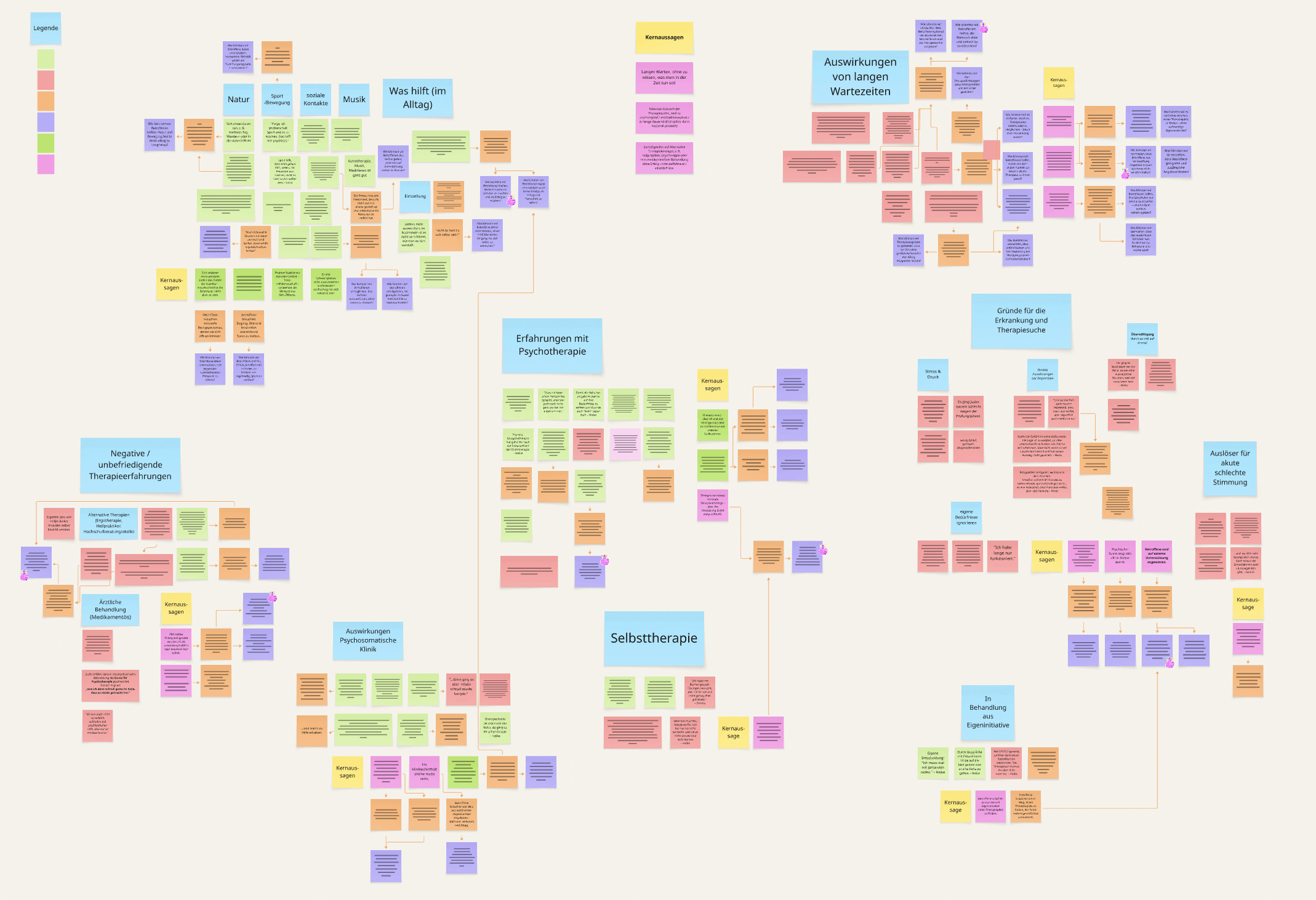
The research was based on three qualitative interviews with affected individuals. Open, non-leading questions were used to capture the interviewees' experiences as authentically as possible. The analysis was carried out in three steps: first, each interview was evaluated individually by marking the key statements. These statements were then clustered across all interviews using affinity mapping, from which the core statements were derived for each cluster. From these, the target audience's needs were formulated, and finally "how might we" questions were developed in order to translate the concrete needs into a solution.
Key insight
Alternative therapy options are often experienced as unscientific or lacking in substance.
Need
Affected individuals need access to well-founded therapy concepts and methods while they wait for a therapy slot with a psychologist.
HMW question
How might we give affected individuals access to evidence-based methods and concepts while they are still on the waiting list?
In addition, a customer journey was created that reflects the average of the three interviewees. The qualitative research was supplemented by market research.
Affected individuals…
feel left alone with their situation.
Affected individuals…
turn to non-evidence-based alternatives, such as alternative practitioners.
Affected individuals…
have little motivation and feel hopeless.
"I was just stuck in this months-long hole that I couldn't get out of on my own."
— Dennis
DepressioLearn creates low-barrier access to evidence-based self-help strategies and gives affected individuals courage and hope. People with depression should feel seen. This is achieved through its USP: short, high-quality videos from psychologists who address those affected directly, educate them about depression, and provide methods that can be applied immediately within the app.
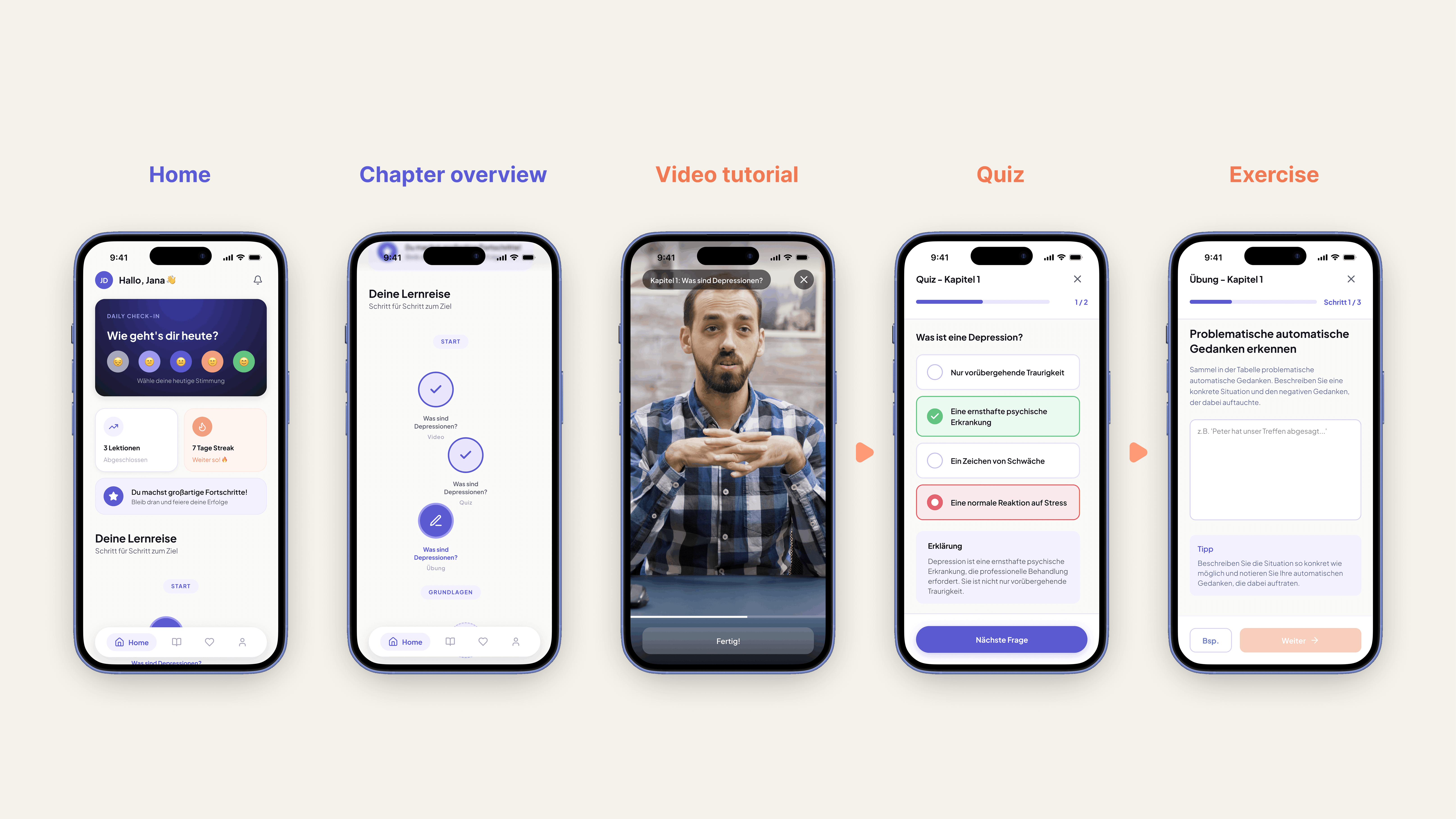
Video tutorials
As a user, I want to watch videos that give me well-founded guidance on what I can do in my situation and that give me hope.
Quizzes
As a user, I want to answer quiz questions after the video to make sure I've understood it.
Applicable exercises
As a user, once I know I've understood the video, I want to start a matching exercise so that I can put the method into practice right away.
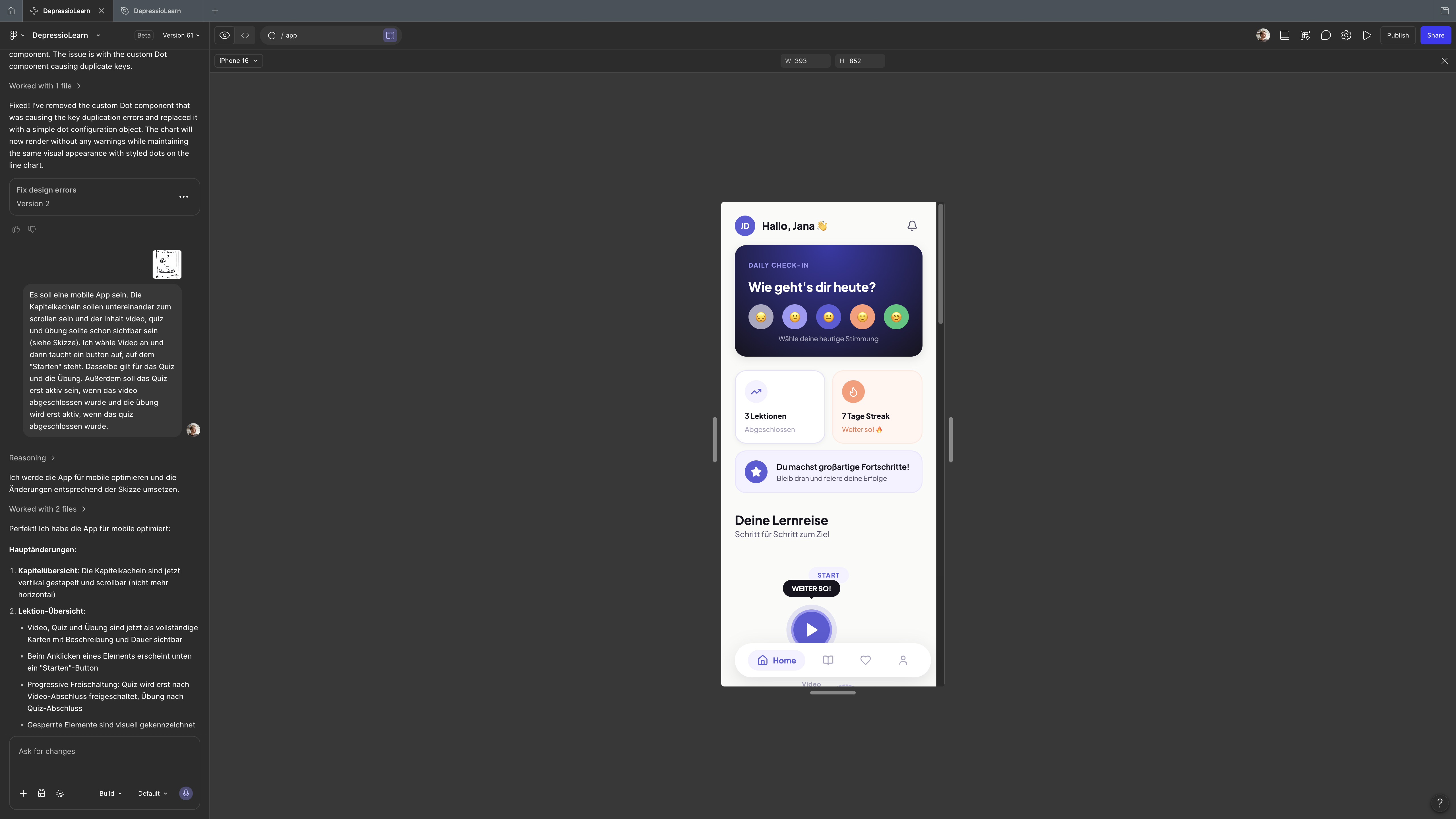
Using Claude and Figma Make, a functional high-fidelity prototype was created in a short amount of time, ready to be used for initial testing.
The business model is based on health insurers covering the cost of the app. For this model to work, the value of the app has to be great enough that insurers save money by deploying it. This becomes possible when therapies are shorter, fewer medications are prescribed, fewer hospital stays are needed, and affected individuals are on sick leave less often or for shorter periods, since insurers cover their salary after six weeks. This effect is meant to be achieved by ensuring that the condition of those affected does not worsen while they wait for a therapy slot, or even improves through the app.
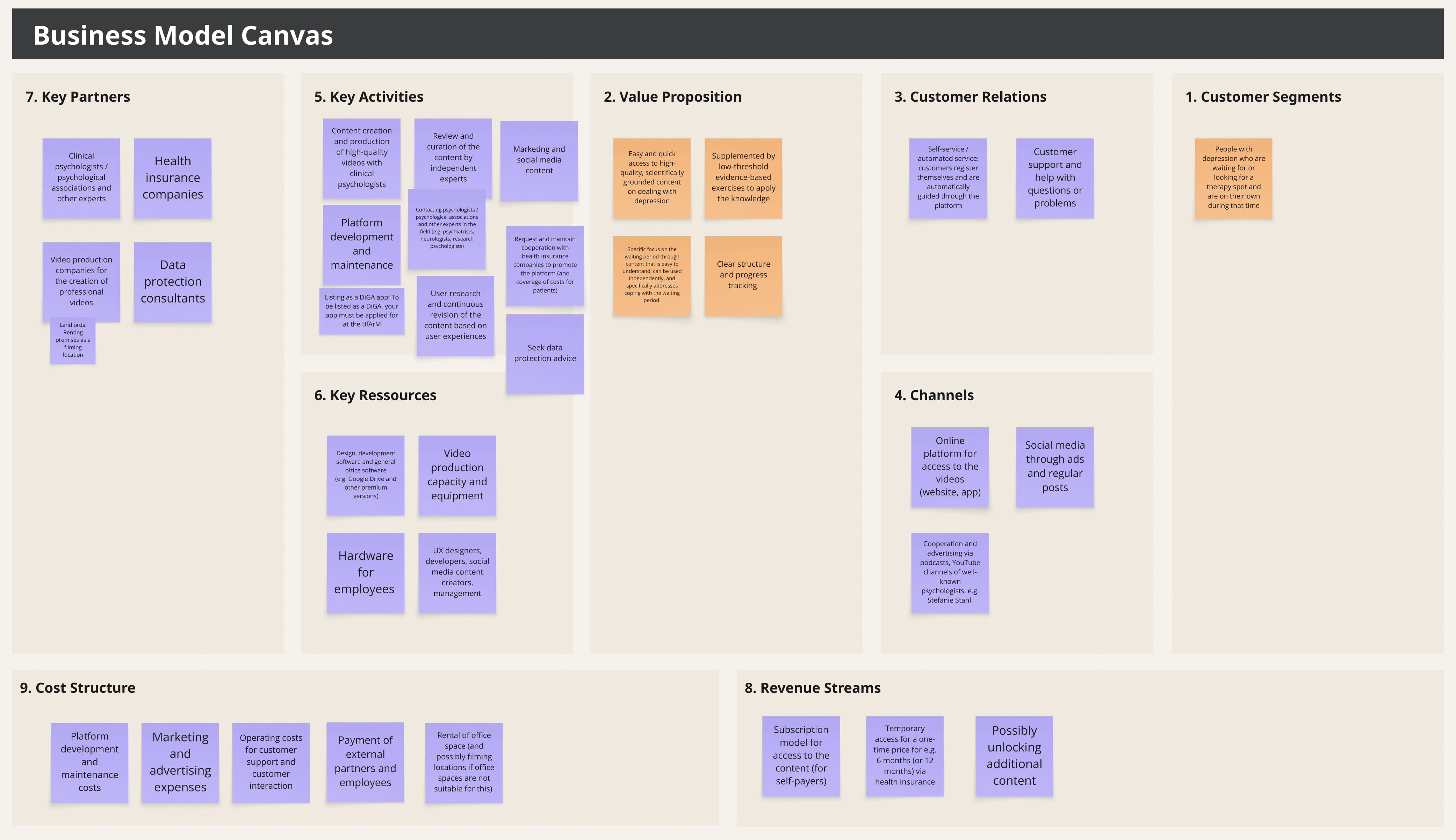
In addition, DepressioLearn must be approved as a digital health application in Germany (DiGA). Part of this approval is demonstrating proven effectiveness through a study of the app. This sums up the necessary business activities: developing an effective app, proving its effectiveness in a study, and obtaining DiGA approval as a prerequisite for cost coverage by health insurers. These activities, along with the underlying value proposition, the customer segments, and the planned revenue streams, are brought together in the Business Model Canvas.
Occasion
Product Management Bootcamp of Digitale Leute School
My Role (solo project)
User and Market Research, Concept Development, Business Modeling, Prototyping, Experiment Design
Bildnachweise